Editor’s Choice
DRT Motorsports Pro R / Turbo R Front Winch Bumper
1.75″ steel tube, 3/16″ winch plate, bolt-on fit for 2022+ Polaris RZR Pro R, Pro S, and Turbo R. Built around the WARN Axon 5500 footprint.
See PickHeavy-duty front and rear protection that fits your machine, mounts your winch, and survives the trail you actually ride.
Four bumpers covering the platforms our customers buy most. Every pick is in-stock, machine-specific, and either ships with a winch mounting plate or is built around a verified factory hitch pattern.
1.75″ steel tube, 3/16″ winch plate, bolt-on fit for 2022+ Polaris RZR Pro R, Pro S, and Turbo R. Built around the WARN Axon 5500 footprint.
See Pick1.75″ steel tubing with a 1/4″ internal winch plate and ARMW UHMW lower armor. Fits Can-Am Maverick X3 (2017+).
See PickLaser-cut steel built for the 2024+ Maverick R. Direct bolt-on, matte-black powder coat, integrated tow points.
See Pick2″ American steel pipe and tread plate. Replaces factory plastic tailgate hinges with steel. Bolts to OEM bed-frame holes.
See PickMost aftermarket bumpers look the same in a thumbnail. The differences that actually show up on the trail are tube thickness, the winch mounting plate, the mounting pattern to your factory frame, and what each material does over a season of riding.
Strong UTV bumpers use 1.5″–1.75″ DOM or laser-cut steel tubing with 1/8″ to 3/16″ plate at impact points. Thin-wall tube and stamped-sheet brackets look the part but fold under a real rock strike.
A “winch-ready” bumper has an internal plate engineered to handle pulling forces in line with a 3,500–6,000 lb winch. Bolting a winch to a non-rated bumper can deform the structure and fail under load.
The best aftermarket bumpers use your factory mounting holes — no drilling into the frame, no fabricated brackets. That means precise fitment to one year and submodel, not “universal RZR.”
Steel takes hard hits, costs less, and accepts a powder coat that lasts. Aluminum drops bumper weight by roughly two-thirds — meaningful if you race or want to preserve approach angle — but bends rather than deforms on a heavy impact.
Five bumpers our team curates for the platforms aftermarket buyers ask about most. Each was selected on real-world build quality, verified mounting compatibility, and stock health going into the 2026 riding season.

Laser-cut, formed, and welded steel front bumper with an integrated winch plate — designed around the WARN Axon 55-S 5,500 lb footprint but compatible with most 3,500–6,000 lb UTV winches. Direct bolt-on for 2022+ Polaris RZR Pro R, Pro S, and Turbo R using the factory front mounting points. Matte-black powder coat survives a season in the rocks without flaking around the fairlead.

A heavyweight steel front bumper aimed at Can-Am Maverick X3 owners who want both maximum protection and a workhorse winch platform. Uses 1.75″ steel tubing with 1/8″ steel plates and an internal 1/4″ mounting plate engineered for SuperATV’s Black Ops 2,500–6,000 lb winch family. The 1/2″ ARMW (a UHMW blend) lower armor adds a sacrificial impact layer that won’t hold mud or rust.
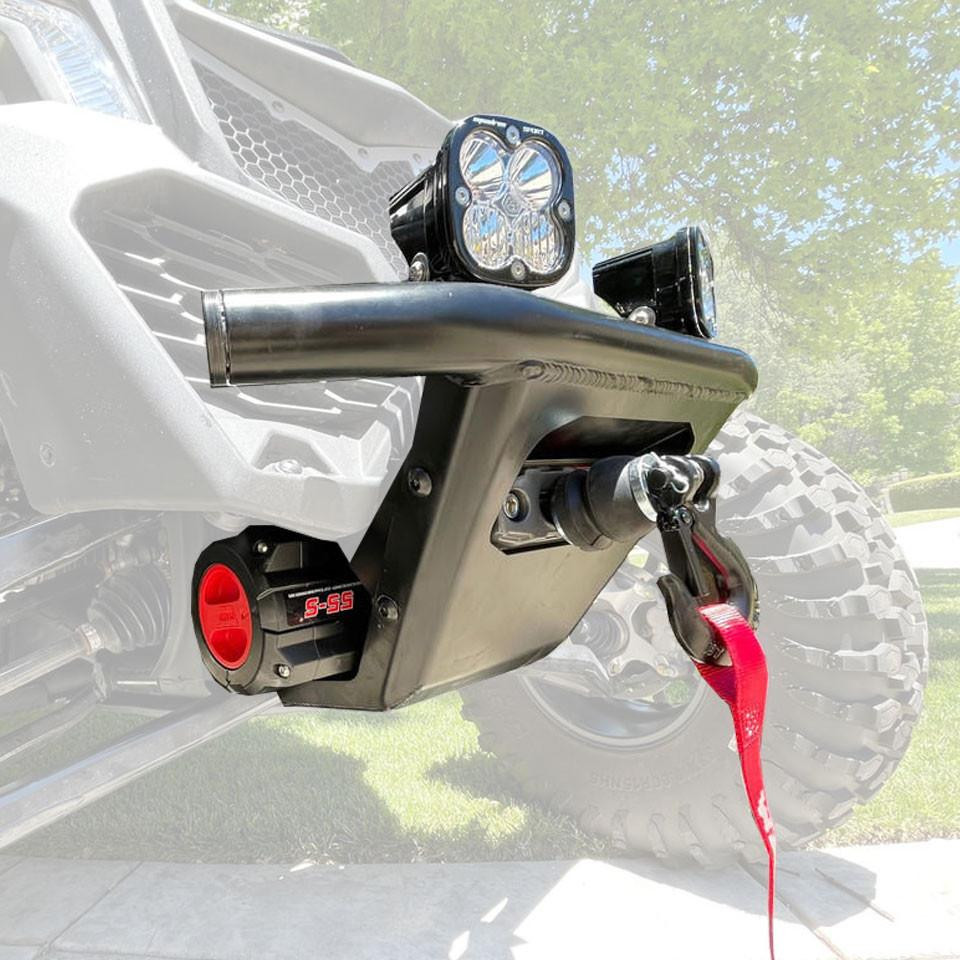
TMW Offroad’s second-generation X3 front bumper is built for Can-Am Maverick X3 owners who want the cleanest light-bar integration in the category. Engineered around the WARN Axon 5,500 lb winch (also accepts the OEM Can-Am winch), with built-in relay and control routing and provisions for either a 10″ light bar or a pair of 3″–6″ pods.

The newest Can-Am sport platform (2024+) is still building out its aftermarket catalog — this DRT front bumper is one of the first machine-specific options out the door. Laser-cut steel, direct bolt-on to the Maverick R factory pattern, matte-black powder coat, and integrated tow points. Pair with a DRT or AJK rear bumper to complete the protection package.
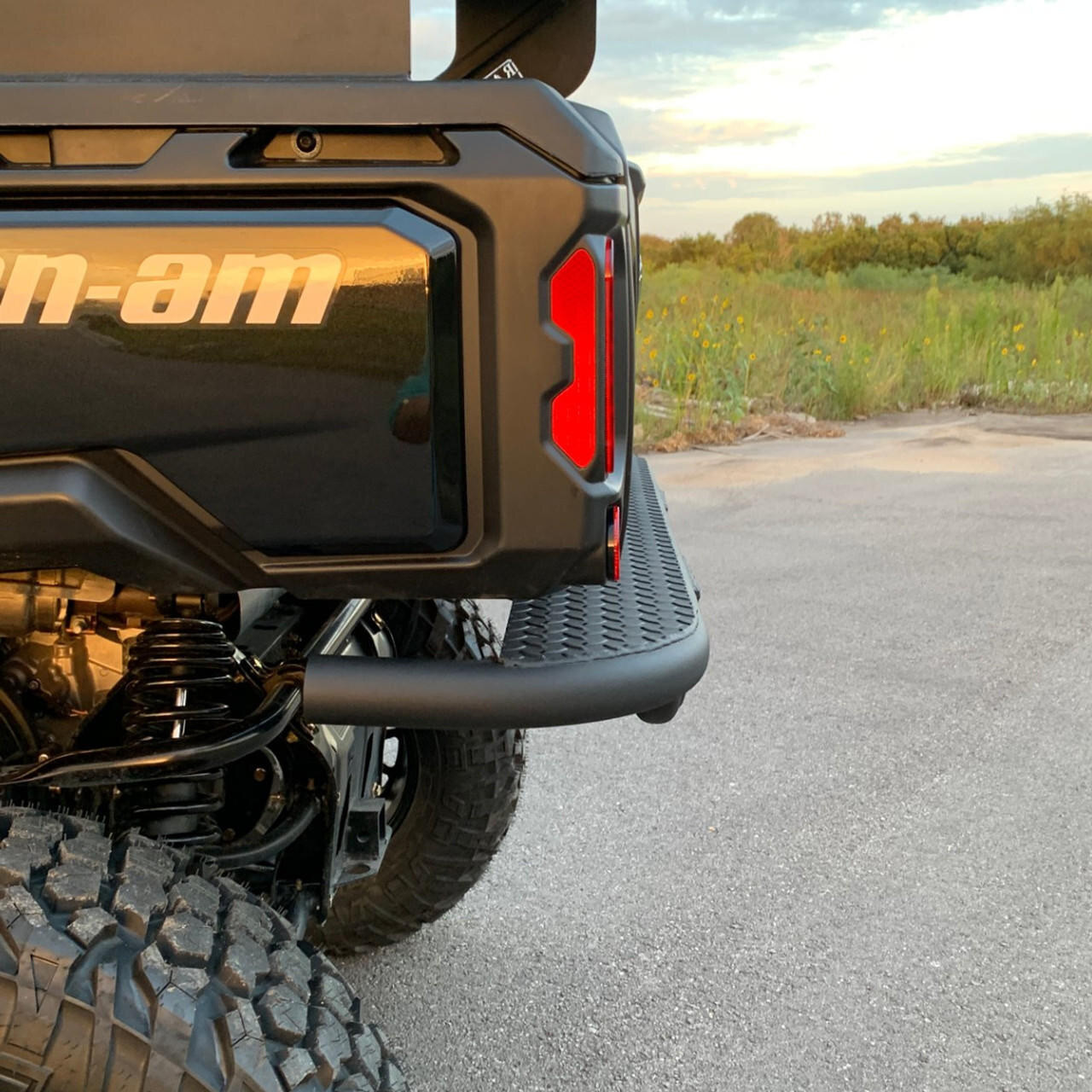
A utility-rig rear bumper built from American steel in Texas, sized for the working Defender owner who hauls and tows. Combines 2″ bent steel pipe with laser-cut tread plate, and ships with steel hinges that replace the factory plastic hinges — the hinges alone are the most common failure point on a daily-used Defender. Bolts directly to factory bed-frame holes; no fabrication required.
Bumpers are fitment-critical — the same DRT chassis logic doesn't bolt to an X3 or a Maverick R. Jump to your machine for the bumper(s) that actually fit, with winch-readiness, mounting reinforcement, and material gauge spec'd per platform.
Halo Polaris chassis — high-speed open-cab sport. The Pro R sees the same trail abuse as the Turbo R but with a wider stance. DRT Motorsports owns this platform on margin and design quality, sharing fitment with the Turbo R.
$395
Laser-cut steel, integrated 5-bolt winch mount, no-cutting install. Engineered specifically for the Pro R and Turbo R chassis with shared mounting.
Same chassis as the Pro R from a bumper-mounting standpoint — the DRT Pro R/Turbo R bumper bolts to both with no modifications. Picking this section because the Turbo R buyer searches separately.
$395
Cross-fits both Polaris halo platforms. The Turbo R buyer needs the same protection geometry as the Pro R — this is the cleanest answer.
The X3 has the deepest bumper aftermarket of any sport platform — both winch-ready and non-winch options, both front and rear. Two strong picks at different price tiers: SuperATV for value, TMW Offroad for built-tougher Gen 2 fitment.
$360.95
Mid-tier value with ARMW (Advanced Rotation-Molded Welded) lower plating. Winch-mount ready for 3,500-4,500 lb units, popular for trail builds.
$649
Race-grade Gen 2 fitment. Heavy gauge, integrated light bar provisions, designed for the X3's higher-energy front-end impacts.
Can-Am's newest sport platform — different chassis, different mounting points than the X3. DRT Motorsports has the cleanest Maverick R-specific bumper on the market, with proper integration for the wider Maverick R nose.
$300
Laser-cut steel chassis-specific bumper built for the Maverick R's unique mounting geometry. The cleanest fitment on the platform.
Utility platform — Defender bumpers prioritize protection and hitch utility over winch-ready aggression. Rear bumpers are more common than front because the bed is the working end of the machine.
$929
American-made steel pipe + tread plate, designed for ranch use: hauling trailers, livestock loads, and the day-to-day abuse of utility work.
Four common UTV riding styles. Each maps to a different priority — protection, weight, integrated mounts, or hitch-utility. Use this grid to anchor your bumper search before brand-comparing.
Brush, rock strikes, and the occasional pinned-against-a-tree winch pull. You want a winch-ready front bumper with thick lower armor.
High-speed runs, jumps, sand. Weight on the nose hurts handling. Lean toward aluminum or a slimmer steel sport bumper.
Frequent winch use, mud that holds water against the bumper. Steel with powder coat plus UHMW lower armor wins here.
Hitch-pulls, tailgate abuse, fuel cans bouncing in the bed. Prioritize a steel rear bumper with reinforced hinges and a 2″ receiver.
Bumpers are one of the most year-and-submodel-specific categories we sell. A part listed for “Polaris RZR” in general almost certainly doesn’t fit every RZR. Walk through this five-step check before checkout.
Most fitment problems we see in returns are caused by skipping step 1 (assuming a sport-platform part fits the utility-platform sibling) or step 3 (running a winch heavier than the bumper’s plate is rated for).
Talk to a TechPolaris RZR Pro XP, Pro R, Pro S, Turbo R, and 4-seat variants all share a model name but have different front mounts. Same warning for Can-Am Maverick (X3, R, Sport), Defender (HD5/HD8/HD10/HD11), and Polaris Ranger (570, XP 1000, Crew). Match year AND submodel.
Most bumpers are sold one end at a time. If you have an existing front winch bumper and want trail protection out back, you only need a rear. If you’re starting fresh, plan a front-first purchase — that’s where impacts and winch needs concentrate.
A 1/4″ mounting plate is enough for any 2,500–6,000 lb UTV winch. A 1/8″ or 3/16″ plate is fine up to about 4,500 lb. Check the manufacturer’s rated capacity on the bumper’s spec page before ordering a heavier winch.
Some bumpers include integrated mounts for a 10″ light bar or two 3″–6″ pods. Others assume you’ll add aftermarket brackets. If your build includes a forward-facing light bar, pick a bumper with the cutouts already done.
A full-coverage front bumper that drops 2–3 inches below the factory line will reduce your approach angle in rocks. Half-bumpers and sport bumpers preserve approach but offer less coverage. Pick based on what your worst trail demands, not the photo.
Land directly on the bumper subset that fits your machine. Each tile filters our Bumpers category to a single vehicle hub so you’re one click from add-to-cart.
A winch-ready bumper has a steel mounting plate engineered to handle the pulling forces of a winch in line with its rated capacity. The plate is typically 1/8″–1/4″ thick and pre-drilled to the standard UTV winch bolt pattern. Bolting a winch to a non-rated bumper risks deforming the bumper and damaging the winch mount under load.
Steel takes harder impacts, costs less, and accepts a powder coat that holds up to mud and brush. Aluminum cuts roughly two-thirds of the bumper weight, which matters on race builds and weight-sensitive desert rigs, but bends rather than deflects on a heavy rock strike. For most trail, mud, and utility riders, steel wins. For dunes, racing, or any build where preserving suspension geometry is a priority, aluminum has the edge.
Not safely. The factory plastic and lightweight steel front fascias on most UTVs aren’t engineered for sustained pulling forces. If you plan to run a winch, buy a winch-ready bumper from the start — the integrated mounting plate is the part that does the work, and retrofitting one rarely ends well.
Adding a direct bolt-on aftermarket bumper using factory mounting holes typically does not void your manufacturer warranty on unrelated systems. What it can affect is coverage on the front structure itself if a failure traces back to the modification. Polaris, Can-Am, Honda, Yamaha, and Kawasaki each have their own policy — if warranty preservation is critical, ask your dealer before installation.
Steel front winch bumpers in the picks above weigh roughly 30–50 lb. On modern sport platforms (Pro R, Turbo R, Maverick X3, Maverick R), the factory suspension handles that added nose weight without retuning. On older Polaris RZR XP 1000 builds with worn shocks, you may notice slightly more nose dive on hard braking — usually fine, but worth a spring-rate check if you’re already pushing the front end with a winch and a big tire.
Front first, almost always. The front bumper sees the rock strikes, the brush, and the winch loads — it’s the higher-stakes purchase. A factory rear bumper is usually adequate for trail and utility work until you start towing or hauling, at which point a steel rear with reinforced hinges (like the Ranch Armor Defender pick above) becomes the next upgrade.
For a 1/8″ or 3/16″ mounting plate, stay at or under 4,500 lb winch capacity. For a 1/4″ plate, you can run up to 6,000 lb without concern. Going heavier than the plate is rated for can elongate the bolt holes over time, especially under repeated stuck-vehicle pulls. See our UTV winch buyer’s guide for matching pull capacity to vehicle weight.
Most direct bolt-on bumpers from the brands featured here (DRT, SuperATV, TMW, Ranch Armor, Bosman Designs, AJK Offroad) include the hardware you need to bolt to factory mounting points. Specialty add-ons — tow shackles, integrated lights, fairleads — are usually sold separately. Check the product page’s “what’s in the box” section before ordering.
Shop the full UTV bumper catalog, browse front and rear by vehicle, or talk to a UTV Source tech if you need a fitment confirmation before you order.