Silence the Static: How Cardo and New Technologies

When it comes to staying connected in extreme off-road environments, Cardo Systems has been leading the way. Known for their innovative wireless communication solutions, Cardo keeps racers, riders, and adventurers talking no matter where the trail takes them. From helmets to full race setups, their technology blends reliability and simplicity to make sure every ride is seamless.
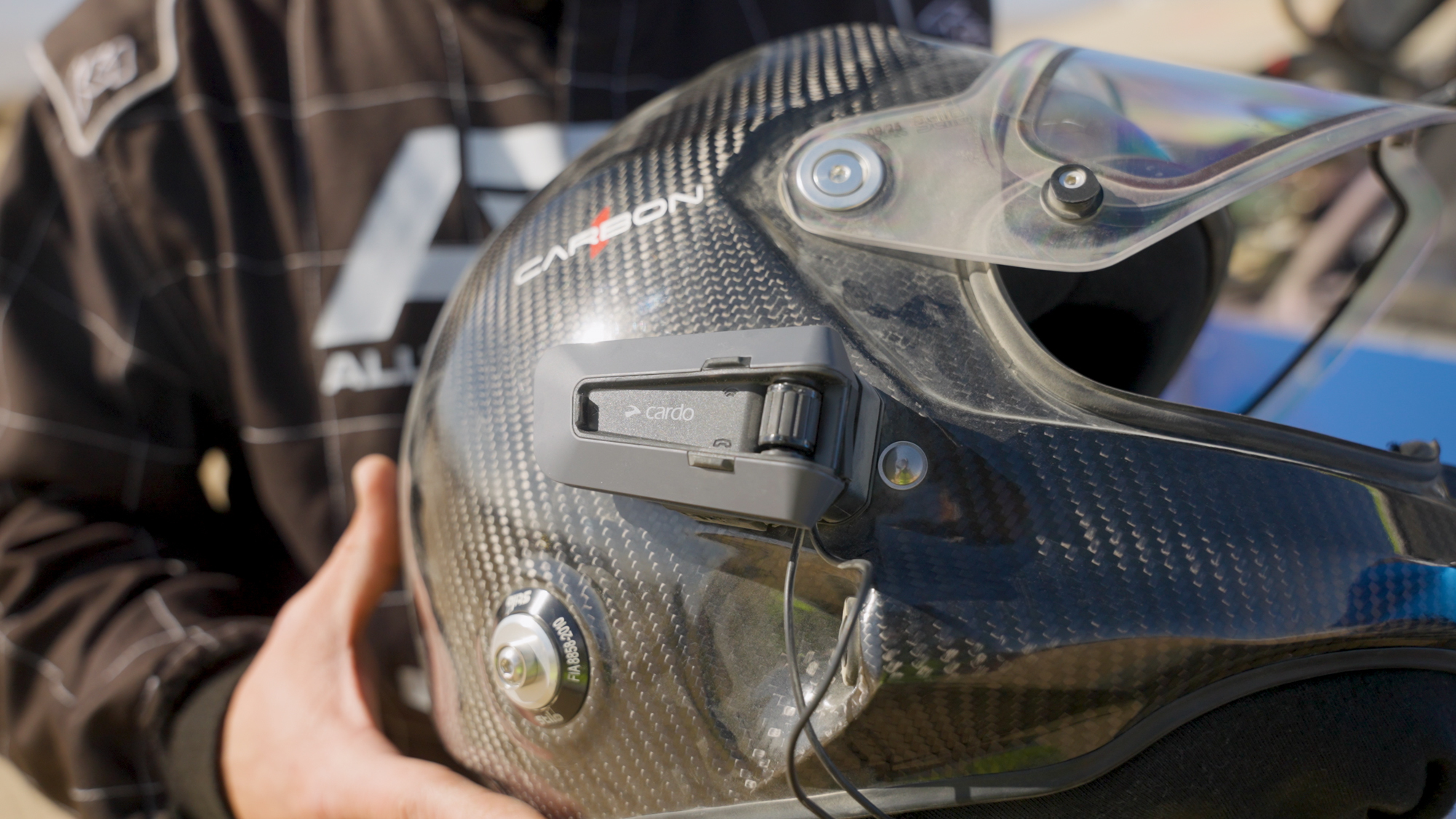
"The guys that were on the side of the trail watching us were blown away. They're like, 'Man ... can you guys talk to each other in your helmets?'"
Johnson Valley is a geological fortress in the desert of California. For the competitors at King of the Hammers (KOH), the terrain is a brutal mix of high-speed desert floor and deep, signal-killing rock canyons. For competitors and enthusiasts alike, the term “good luck” is often used when vehicles and parts break in the depths of those canyons. Cell service is non-existent, and even if you have a signal, you better have even better friends that are ready, and capable, of an adventurous rescue mission. There’s simply nothing like Johnson Valley, which makes this place the ultimate proving ground for man and machine at KOH – the toughest one-day desert race in the world.
For years, teams have relied on traditional VHF and UHF radio equipment to communicate, but the geology of the desert often wins. Signals fade, static takes over, and drivers are left screaming into microphones, hoping their pit crews can hear them through the interference. In recent years, complex satellite phone-based systems were utilized, but the startup and month-over-month upkeep costs were absurd for anyone running a small- to -medium sized off-road race team.
Now, new technology has surfaced, and off-road racing teams are experiencing a quiet revolution in the cockpit. In 2026, two competitors, Cole Clark of 24 Racing and Dustin Robbins of Team All Things UTV, abandoned traditional radio systems for a cutting-edge "hybrid" approach at KOH. By integrating Cardo Systems’ technology with Starlink satellite internet, they created a crystal-clear, global communication bubble for a fraction of the cost of traditional race radio setups.
When asked about his experience with those traditional radios and expensive setups, Clark admits that, “They almost never work. You end up having this giant tower in the pit … big heavy 12-volt battery … and it still doesn’t work.”
A change is on the horizon.
INTEGRATING THE TECH
The philosophy behind this shift is simple: reliable communications achieved through proven consumer technology. Cole Clark, entering his ninth KOH race in 2026, realized that traditional setups required those massive towers in the pits, heavy batteries, and complex tuning, yet still failed to provide consistent coverage.
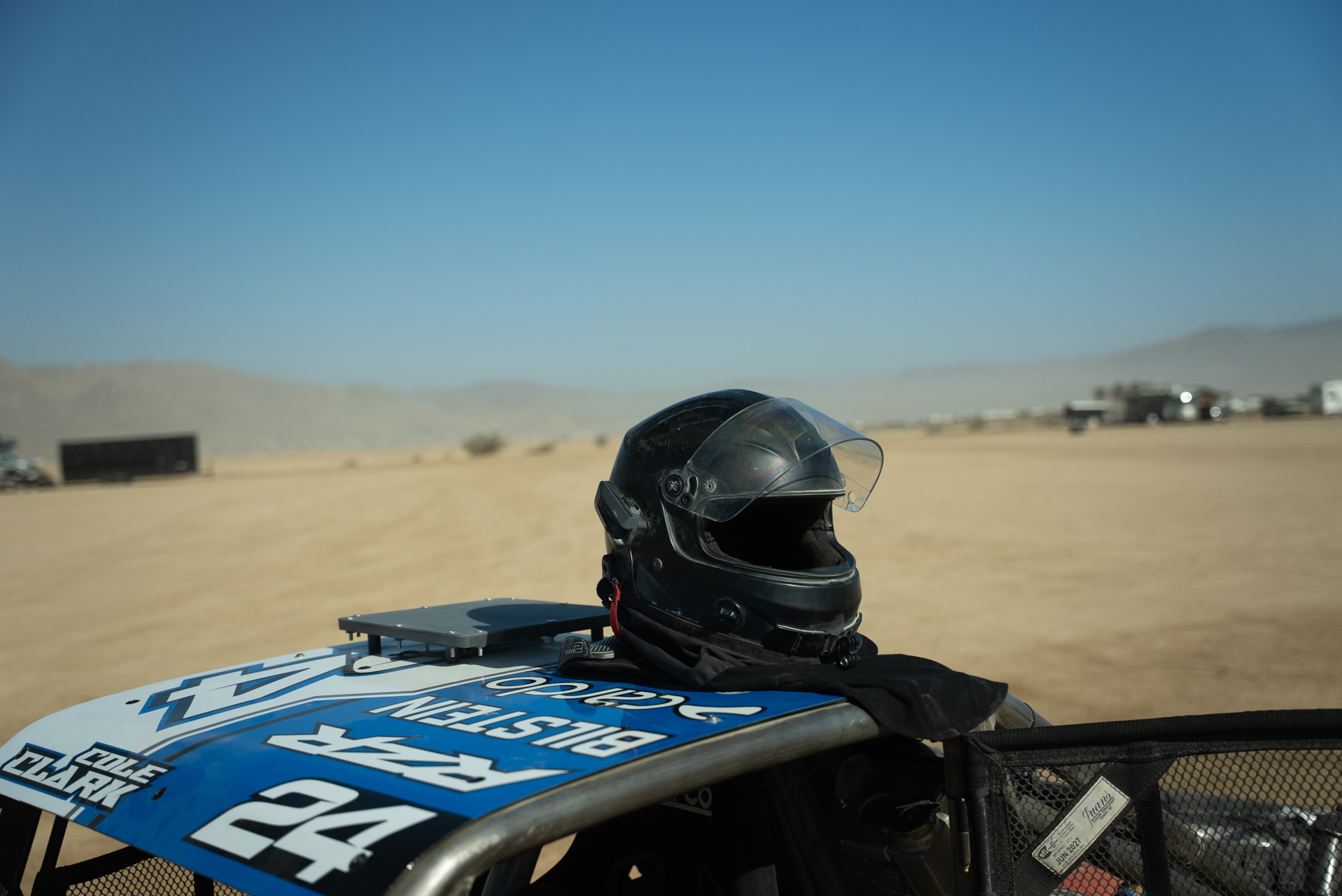
Clark’s integration focuses on modularity. He utilizes a Starlink dish mounted with a simple magnetic mount. This allows him to transfer the entire internet backbone from his pre-runner to his Polaris Pro R race UTV in minutes. "It’s in and out, done," Clark says, noting that the entire setup costs less than $1,000, compared to the $3,000 required for a high-end wired radio system, which is hard mounted into a vehicle and cannot be moved (or removed) without serious time implications. "I can throw it on my helmet. I can jump in either vehicle ... I don't have to transfer anything," Clark explains. "It’s just in and out, done. You spend more time having fun than working on your stuff."
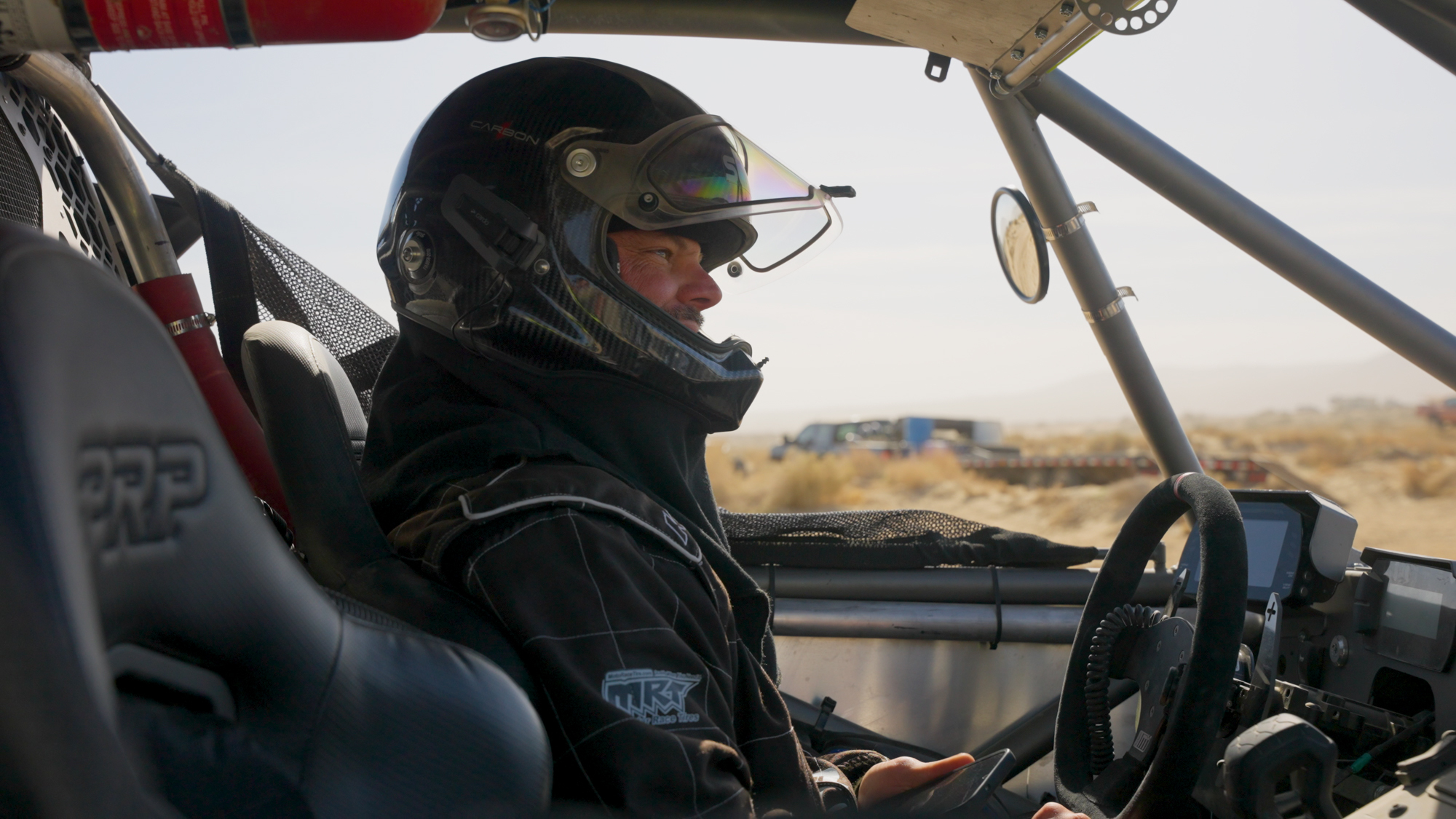
Dustin Robbins, racing a CT Race Works-built Can-Am Maverick R X RC, takes a more permanent approach to his setup, but still utilizes Cardo Systems wireless communicators as the backbone of his comms. Leveraging his background in the motorcycle industry, Robbins installed a Starlink Mini directly to the roof of his vehicle, wired into the vehicle’s 12-volt power supply. This connection allows them to communicate "with anyone in the country with non-stop availability," Robbins notes.
SYSTEM OUTLINE: THE DIGITAL CHAIN
Both teams utilized a streamlined digital signal flow to maintain constant connectivity:
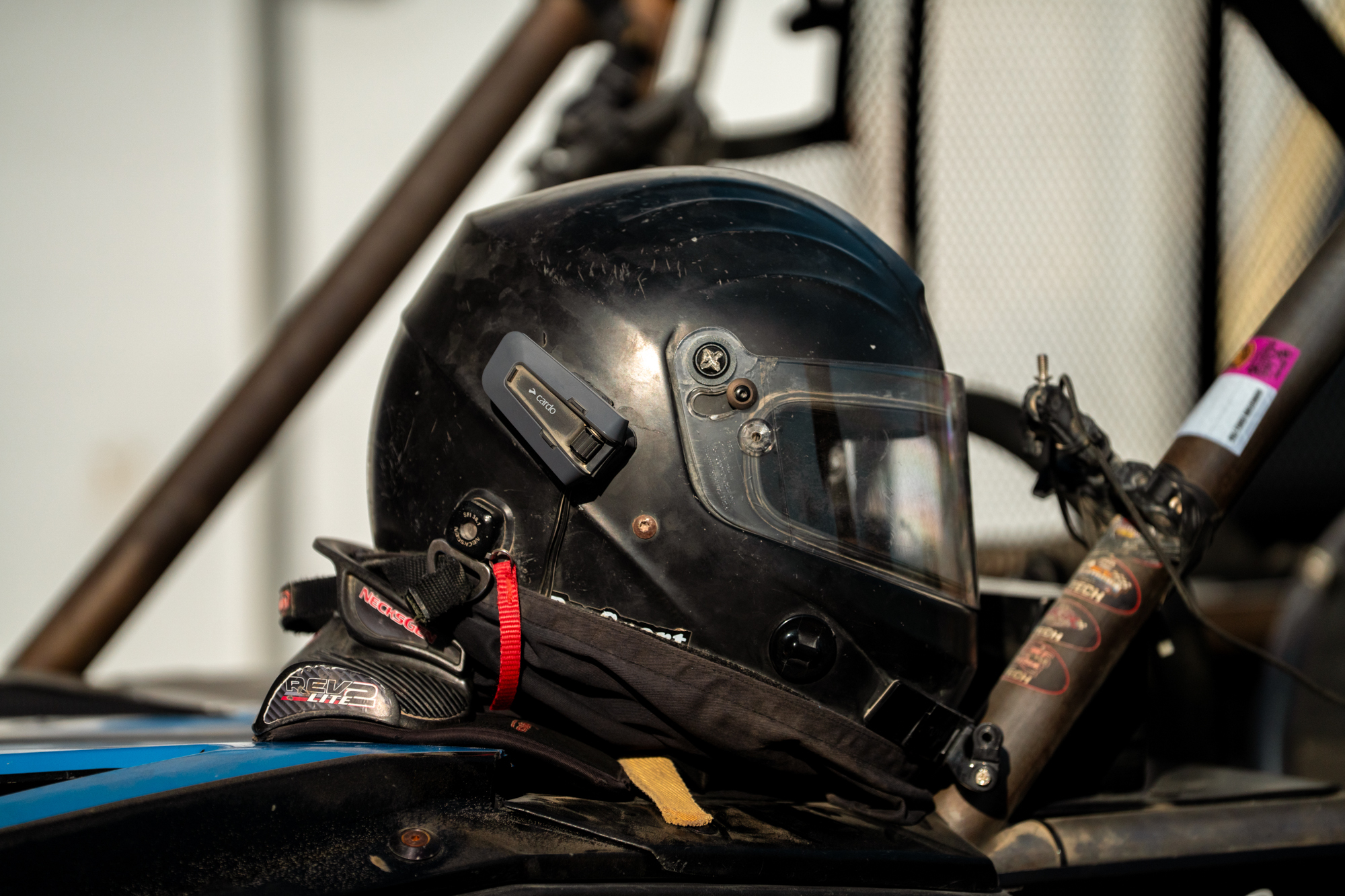
- Inside the Helmets (DMC connection): In the cockpit, Cardo Packtalk Edge ORV units were mounted on each helmet and utilized Cardo’s proprietary Dynamic Mesh Communication (DMC) to create an “always-on” open line between driver and co-driver. This eliminated the need for wires or buttons to communicate within the vehicle.
- The Bridge (Zello App): Cardo units were paired via Bluetooth to a smartphone running the Zello app, which acted as a long-range radio transmitting voice data over the internet. The smartphone is hard mounted in the race vehicle.
- The Connection (Starlink): The smartphone connected via Wi-Fi to the vehicle-mounted Starlink, which provides high-speed internet anywhere in Johnson Valley, regardless of line-of-sight to the pits.
- The Trigger (Push-to-Talk): To communicate with the pits, the drivers use Bluetooth Push-to-Talk (PTT) buttons. Clark uses an ASUS button paired to his phone, while Robbins utilizes a steering-wheel-mounted button.
REAL-WORLD PERFORMANCE
The impact of this technology on race day is profound. For Cole Clark’s father, Khan, the difference is audible. "Before it was ... screaming," Khan explains. "Now [when in the pits] ... I can hear that there is an issue with the driver’s side rear tire." Because the digital signal is crystal clear, the pit crew can prepare specific parts miles before the car arrives, changing the pit stop from a reactive scramble to a proactive surgical strike.
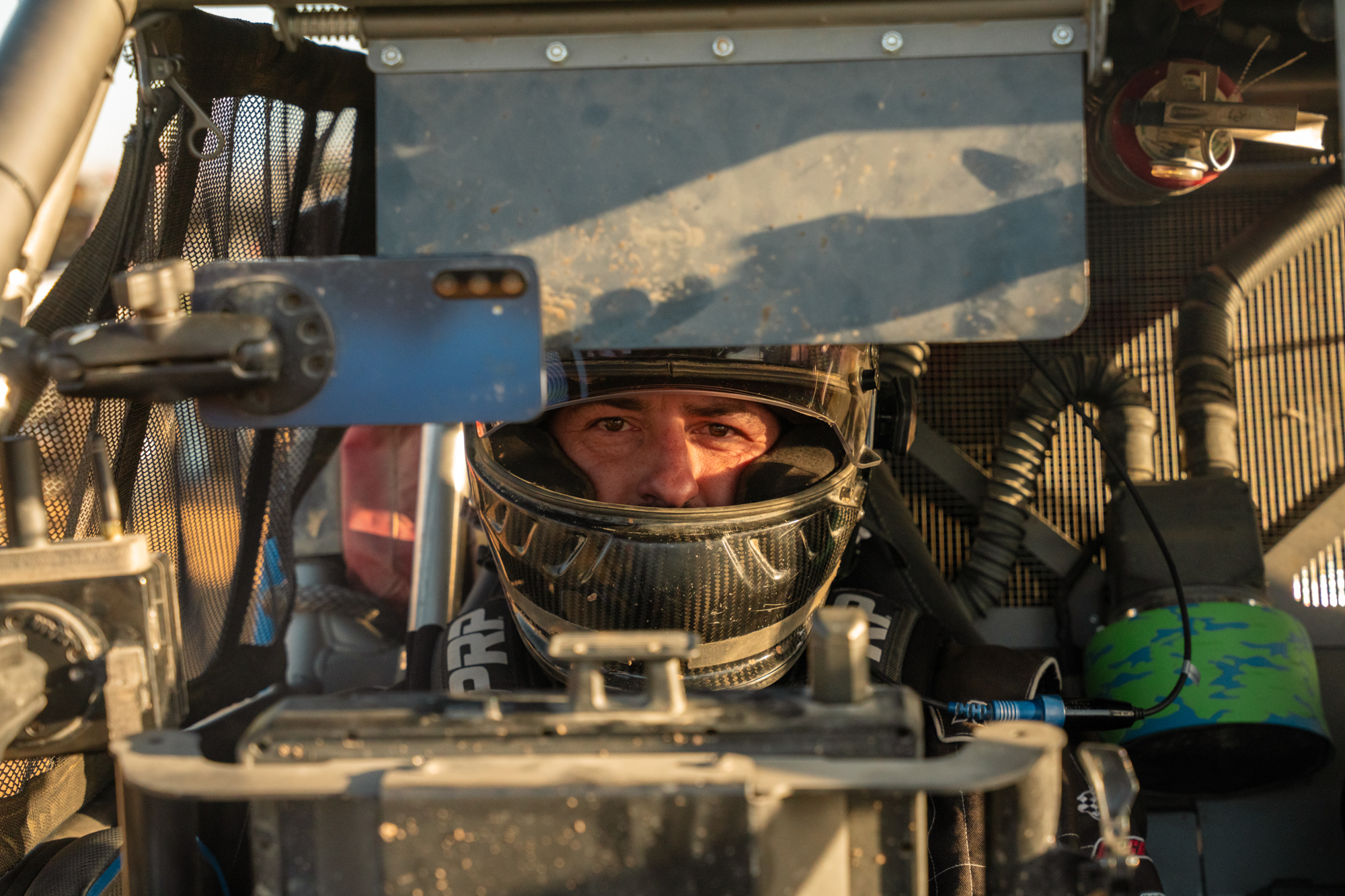
For Dustin Robbins and his navigator Ben, the system offers a psychological advantage. The noise-canceling capabilities of the Cardo units allow them to speak at normal conversational volumes. "I can keep my heart rate down," Robbins says, describing the cockpit as a place of "peace and quiet" rather than chaos.
Perhaps the greatest advantage is wireless freedom. In rock crawling, navigators often have to exit the vehicle to spot lines or winch. With traditional wired helmets, communication is severed the moment the plug is pulled. With this hybrid setup, the navigator can jump out, walk up to a mile away, and still guide the driver effortlessly through the headset, creating a calm, focused environment for everyone.
Mark Welch, a member of Clark's team, recalls a moment where this tech baffled onlookers. While winching on a trail, Welch and Clark were able to coordinate complex movements from outside the vehicle without screaming. "I jumped out and started helping with the winch ... talking to each other while we're winching and it's just seamless," Welch says. "The guys that were on the side of the trail watching us were blown away. They're like, 'Man ... can you guys talk to each other in your helmets?'"
While the 2026 King of the Hammers is done and dusted, this technology revolution, led by Cardo Systems, is on the cusp of something great. The system was proven in the harshest conditions that KOH has to offer, with both Dustin and Cole achieving incredible top 5 finishes on race day.
Both of these teams proved that sometimes the best way to conquer the most primitive terrain on earth is with the most advanced technology in the sky.