UTV Spare Tire Mounting Do’s and Don’ts
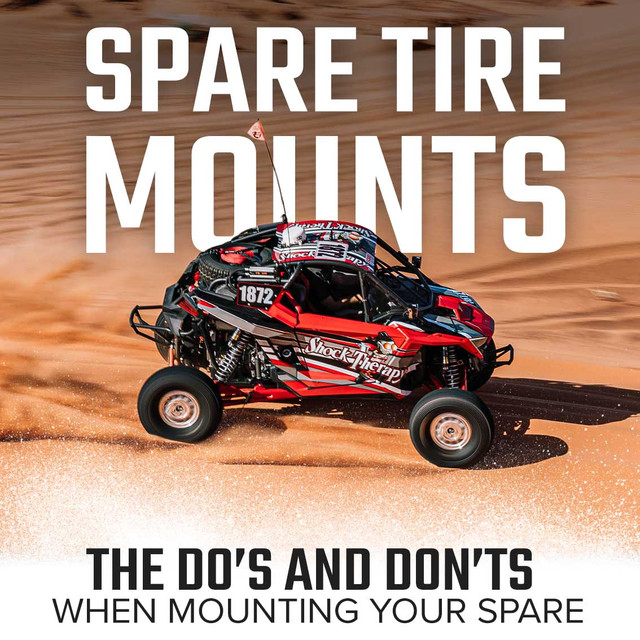
Spare Tire Mounting Do’s and Don’ts
A spare tire is one of those things you hope you never need, but when you do, you really need it. Flats happen on the trail, in the rocks, out in the desert, and sometimes at the worst possible time. How that spare is mounted can either make the situation simple or turn it into a mess.
Here’s a clean, no-nonsense breakdown of what works and what doesn’t when mounting a spare tire on a UTV, with a big emphasis on using the right spare tire mount.
The Do’s
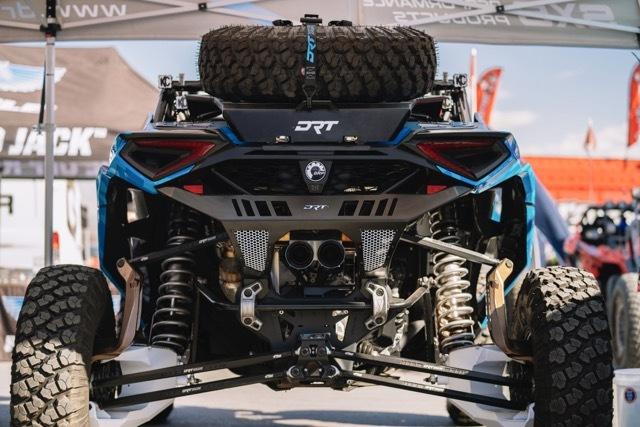
Do use a real spare tire mount
Spare tire mounts are built for off-road use. They’re designed to handle vibration, hard hits, and the weight of modern wheels and tires. A proper mount keeps the spare locked in place and spreads the load where it should be, instead of stressing racks or cages.
Do think about where the weight sits
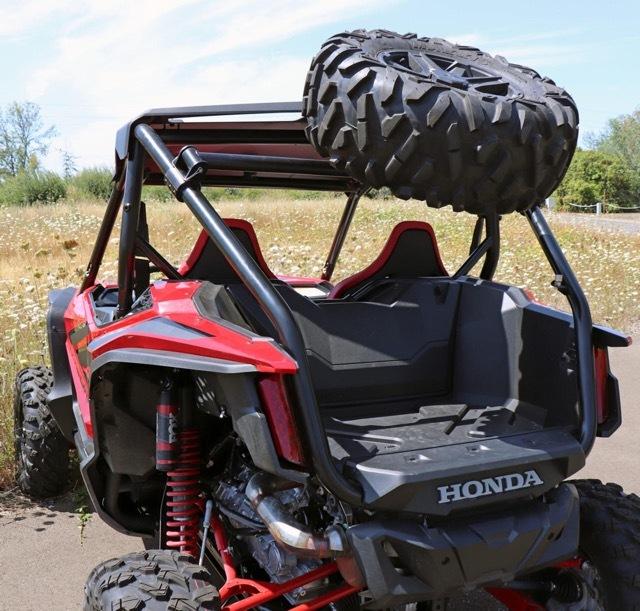
A full-size spare is heavy. Mounting it too high or too far back can change how the machine feels on climbs, descents, and side hills. Rear and bed-mounted spares usually keep weight lower and more controlled. Roof-mounted spares can work, but only with mounts designed to handle that load.
Do match the mount to how you ride
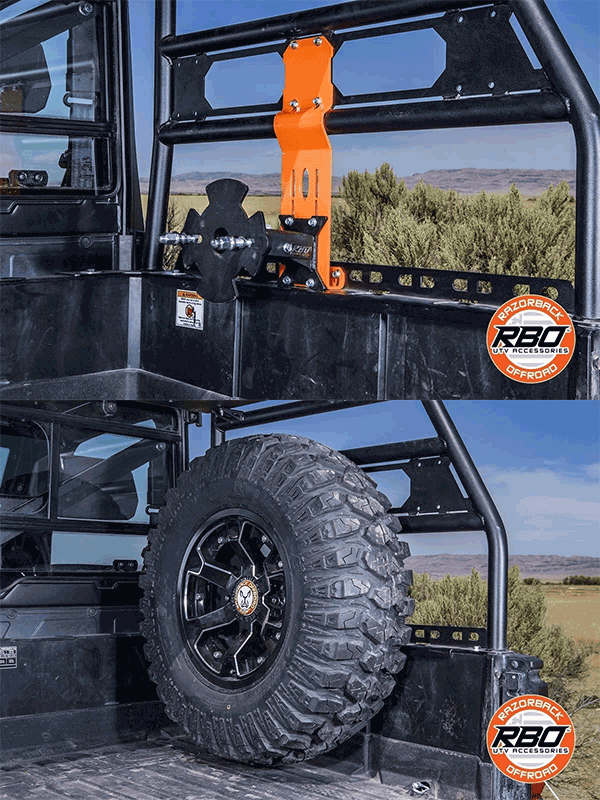
Quick access matters when you’re changing a tire on the trail. Swing-out mounts make that easier. Bed and rack mounts keep things clean and compact for utility or cargo-focused setups. The best option is the one that fits how the machine actually gets used.
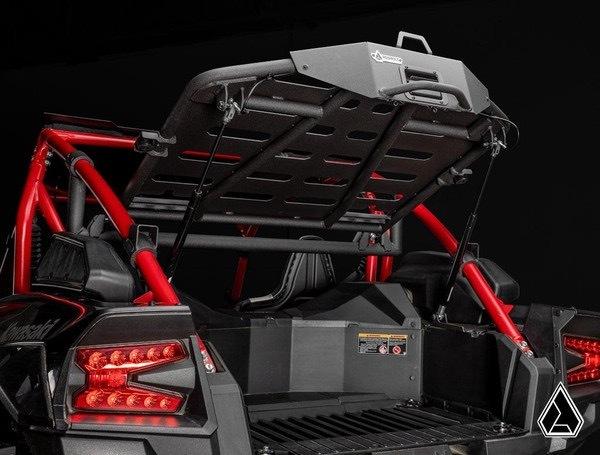
Do double-check clearance
Before calling it done, cycle the suspension, open the tailgate, dump the bed if you have one, and check rear visibility. A good mount still needs to be positioned correctly to avoid headaches later.
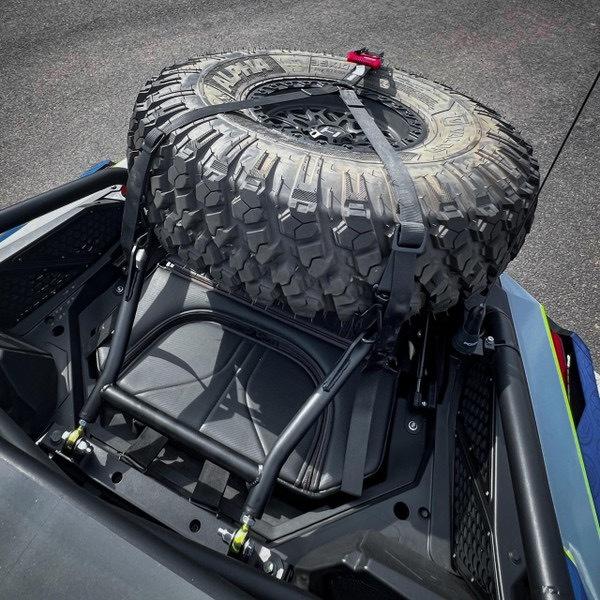
Do use Y-Straps for secure fit
If it's not bolt mounted, Y-straps keep your spare locked down and rattle-free on rough terrain.
Do give it a quick check before rides
Bolts loosen over time, especially after rough trips. A fast walk-around before heading out helps keep rattles away and prevents losing a spare when you least expect it.
The Don’ts
Don’t rely on straps and hope for the best
Ratchet straps and bungees aren’t built for long-term spare tire duty. They stretch, loosen, and allow movement. That movement leads to noise, damaged racks, or a tire shifting at the wrong moment. It's good to check the
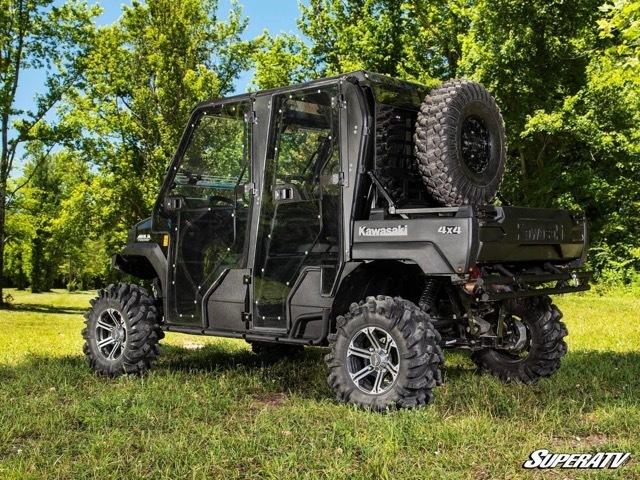
Don’t overload factory racks or cages
Not every rack or cage is designed to carry a heavy spare, especially with beadlock wheels. Skipping a proper mount can lead to bent tubing, cracked mounts, or worse.
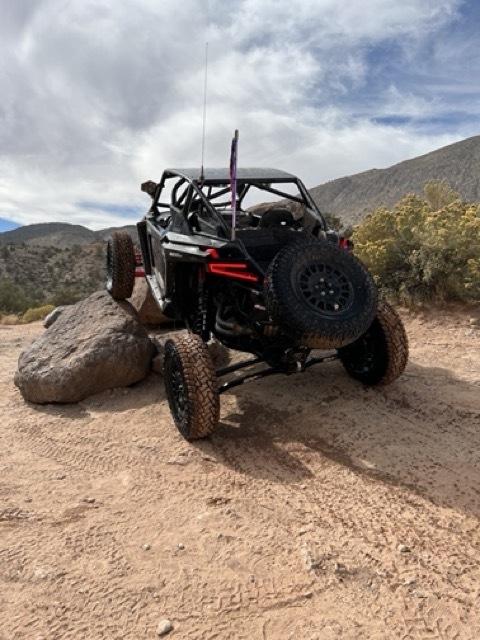
Don’t block things you actually use
If the spare blocks taillights, cameras, license plates, or cargo access, it’s going to get old fast. Convenience matters, especially when you’re tired, dirty, and dealing with a flat.
Don’t forget how heavy your setup is
Big tires and beadlocks add up quick. Make sure the spare tire mount you’re using is rated for your wheel and tire combo, not just a lighter stock setup.

Don’t wait until you’re stuck to find issues
Mount it up, drive around, hit some bumps, and listen for movement. It’s much easier to make adjustments in the garage than miles from the trailer.
Why Spare Tire Mounts Matter
Spare tire mounts exist to make life easier when things don’t go as planned. They keep the tire secure, protect the machine, and make tire changes less of a hassle when you’re already dealing with a flat.
UTV Source carries spare tire mounts built for real riding conditions and real use. Set it up right once, and it’s one less thing to worry about when you’re out doing what the machine was built for.