Use-case picks · Updated May 2026

Best UTV
For Trail Riding

Six trail-tuned machines, the comfort gear that turns 30-mile rides into 80-mile rides, and complete build math from $1,100 to $3,400 — sorted by trail width, ride comfort, and how the aftermarket actually shakes out.

By the UTV Source product team Updated May 18, 2026 Read time 14 min

Best UTVs for trail riding, by platform

Six machines tuned for trail miles — from the 50-inch narrow-trail RZR Trail through the 68-inch rocky-trail KRX to the 5-seat Honda Pioneer that hauls the whole family. Every spec is sourced from the manufacturer's own 2026 model pages.

Polaris RZR Trail 1000 narrow-trail UTV with Tusk Terrabite trail tires
Best Narrow-Trail Sport

Polaris RZR Trail 1000

2026 Model Year · MSRP from $19,499

The Trail 1000 (and its big sibling the Trail S 1000) exist because most marked east-coast and mid-Atlantic trail systems gate access at 50 inches — that's the regulation, not a marketing claim. A 64-inch RZR XP literally cannot enter Hatfield-McCoy's marked single-track. The Trail 1000 fits, and Polaris built it as a dedicated trail platform from day one, not a narrowed version of something wider.

The 999cc twin makes 100 horsepower naturally aspirated — plenty for trail speeds — and the suspension is tuned for compliance over the small-bump chatter trails throw at you all day, not for the big hits a wider RZR XP eats. The four-seat Trail S 1000 sibling adds a second row at 60-inch stance for shoulder-season family rides while staying narrow enough for most western trails.

  • Engine: 999cc ProStar twin, 100 HP, NA
  • Stance: 50 in (Trail 1000) / 60 in (Trail S 1000)
  • Front travel: 12.25 in (Trail S)
  • Rear travel: 13.2 in (Trail S)
  • Ground clearance: 12.5 in
  • Bolt pattern: 4x156 (shared with Pro XP, Turbo R, Ranger XP)
Why it wins for trails
  • Only 50 in sport UTV that opens marked east-coast trail systems
  • Trail-tuned shock valving handles small-bump chatter for hours
  • Trail S 1000 (60 in) adds a real second row without giving up trail access
  • Shares the Polaris 4x156 bolt pattern, so wheel/tire selection is wide-open
Trade-offs
  • 100 HP feels modest if you're moving from a turbo platform
  • Narrower stance is less stable on high-speed gravel and fire roads
  • Trail S 1000's second row is tight for adult-sized passengers
Shop Polaris RZR accessories
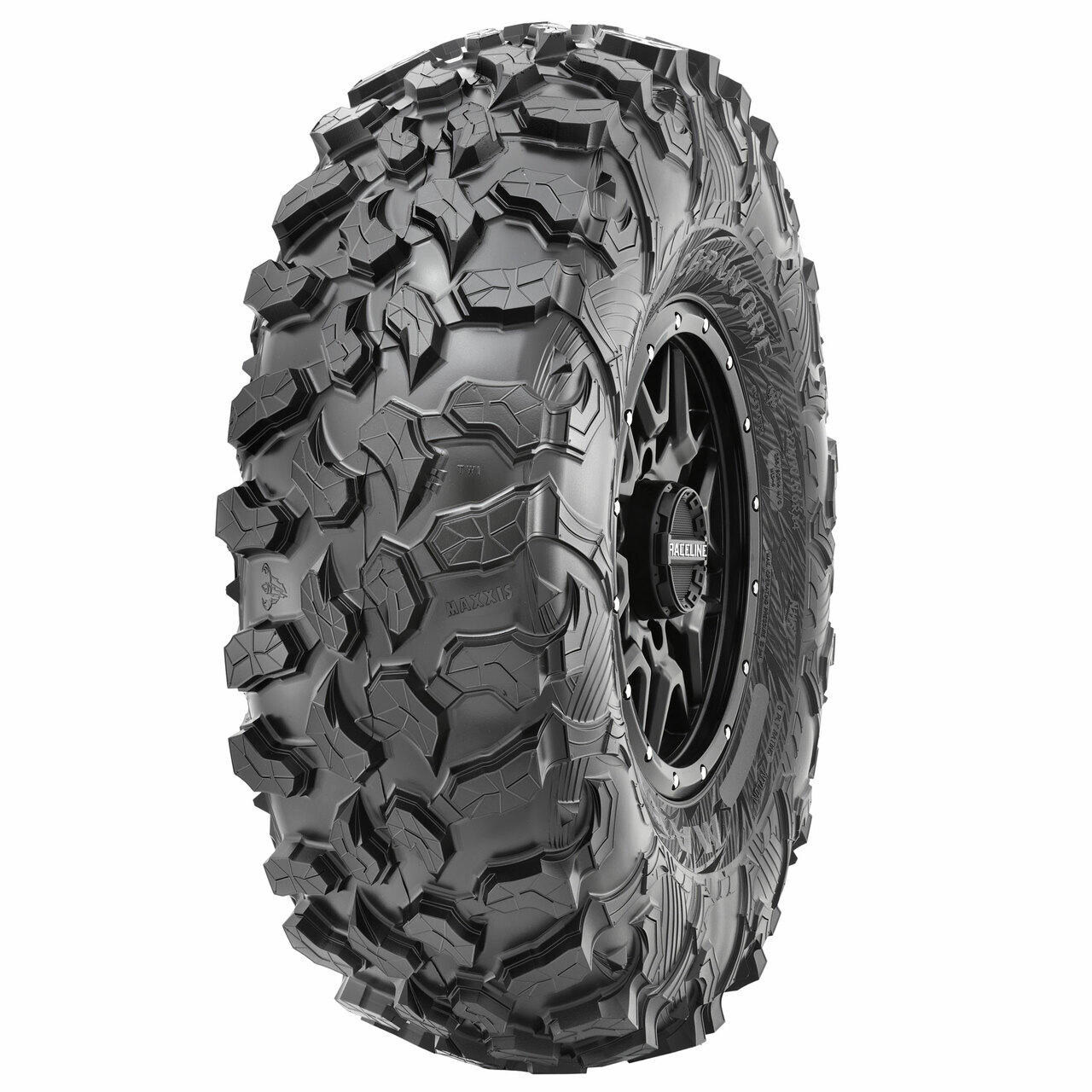
Polaris RZR XP 1000 sport trail UTV with Maxxis Carnivore hybrid tires
Best All-Around Trail Sport

Polaris RZR XP 1000

2026 Model Year · MSRP from $21,799

The XP 1000 has been the workhorse of the trail-sport class since 2014 and the platform every other 64-inch sport gets benchmarked against. The 999cc ProStar twin makes 110 horsepower naturally aspirated — the right balance for trails, where flatter NA torque lets you feather the throttle through technical sections without surging like a turbo does. The Walker Evans needle shocks come trail-tuned from the factory, not bottomed-out from desert prerunner valving.

What buys the XP 1000 the "best all-around" spot isn't peak performance — it's the aftermarket catalog. After eleven model years on a stable chassis, every windshield, every roof, every cage, every comfort upgrade you could want exists for this machine, often in multiple price tiers. A trail build on the XP 1000 is the cheapest trail build per square inch of upgrade options, period.

  • Engine: 999cc ProStar twin, 110 HP, NA
  • Stance: 64 in
  • Front travel: 16 in
  • Rear travel: 18 in
  • Ground clearance: 13.5 in
  • Bolt pattern: 4x156 (shared with Pro XP, Turbo R, Ranger XP)
Why it wins for trails
  • Deepest aftermarket trail catalog of any platform on this page
  • NA torque curve is more forgiving than turbo for technical trail work
  • Walker Evans trail-tuned shocks handle chatter and big hits both
  • Stable used-market resale because of the long production run
Trade-offs
  • 64 in stance locks you out of marked 50 in trail systems
  • 110 HP feels soft against Pro XP's turbo on hardpack and fire roads
  • 2024+ refresh changed the dash and switches — older-year aftermarket fit varies
Shop RZR XP 1000 accessories
Polaris RZR Pro XP premium trail sport UTV with UTVZilla glass windshield
Best Premium Trail Sport

Polaris RZR Pro XP

2026 Model Year · MSRP from $27,999

The Pro XP is the right pick when "trail riding" means 60-mile days at speed on western fire roads and not 15-mile crawls on east-coast single-track. The 925cc Polaris turbo makes 181 horsepower, the wheelbase grew over the XP 1000 for high-speed stability, and the Fox 2.5 Podium QS3 shocks offer factory three-position compression adjustment so the same machine that runs hard fire-road trails on Friday can be dialed back for technical Sunday rides.

Pro XP's trade-off versus the XP 1000 is twofold. Turbo power means turbo behavior — the torque step adds challenge in technical sections where you're modulating around rocks. And the wider 64-inch stance plus longer wheelbase make it physically bigger to thread through tight turns. Buy a Pro XP if your trails are wide and your priority is covering ground; buy the XP 1000 if your trails are tight and your priority is finesse.

  • Engine: 925cc ProStar Turbo twin, 181 HP
  • Stance: 64 in
  • Front travel: 18 in
  • Rear travel: 20 in
  • Ground clearance: 14.5 in
  • Bolt pattern: 4x156 (shared with XP 1000, Turbo R, Ranger XP)
Why it wins for trails
  • 181 HP turbo eats fire-road miles like nothing else in the class
  • Fox 2.5 Podium QS3 three-position compression adjustable on the fly
  • Wider wheelbase = more stable at 50+ mph on flowy western trails
  • Same 4x156 bolt pattern as XP 1000 = wheel/tire crossover
Trade-offs
  • Turbo torque step makes technical sections harder to modulate
  • Wider/longer chassis is harder to thread through tight turns
  • $6,000-$10,000 price premium over a comparably equipped XP 1000
Shop RZR Pro XP accessories
Kawasaki Teryx KRX 1000 rocky-trail sport UTV with Tusk Terrabite radial tires
Best Rocky-Trail Sport

Kawasaki Teryx KRX 1000

2026 Model Year · MSRP from $22,099

The KRX 1000 is purpose-built for rocks and slow-speed technical trails — the use case that turbo platforms and lower-clearance sport UTVs struggle with most. Long wheelbase (98.8 inches), high 14.4-inch ground clearance, and Fox 2.0 Podium internal-bypass shocks designed for slow-speed articulation, not whoop sections. The 112-HP twin is tuned for low-end torque to climb ledges, not peak top-end.

At 68.1 inches wide, the KRX is the widest sport UTV on this page, which gives it lateral stability on off-camber rock faces that narrower machines wobble on. The trade-off is the same stance keeps you off any marked 64-inch-or-under trail. KRX riders typically ride western rocky trails (Moab, Rubicon, southern California desert technical) where width regulations don't exist. If your trail mission is rocks first and miles second, this is the right pick.

  • Engine: 999cc twin, 112 HP, NA
  • Stance: 68.1 in
  • Wheelbase: 98.8 in (long for class)
  • Front travel: 18.6 in
  • Rear travel: 21.1 in
  • Ground clearance: 14.4 in
  • Bolt pattern: 4x137 (shared with Maverick X3, Defender, Talon)
Why it wins for trails
  • 14.4 in ground clearance – class-leading for rock crawl
  • Long 98.8 in wheelbase = stable on slow-speed ledges
  • Fox 2.0 internal-bypass shocks tuned for articulation, not whoops
  • 4x137 bolt pattern shares wheels with Can-Am X3 and Defender
Trade-offs
  • 68.1 in stance locks you out of east-coast trail systems
  • Long wheelbase makes tight switchbacks harder than the RZR XP
  • Aftermarket is thinner than Polaris and Can-Am platforms
  • NA tune means highway transit between trails is slow
Shop Kawasaki KRX accessories
Honda Pioneer 1000-5 Deluxe trail utility UTV with PRP 4.2 harnesses
Best Trail Utility

Honda Pioneer 1000-5 Deluxe

2026 Model Year · MSRP from $22,499

The Pioneer 1000-5 is the only modern UTV with a real automotive-style 6-speed Dual Clutch Transmission — no CVT belt to burn through on long climbs, no belt-change tools to carry, no "what if my belt dies 30 miles in" anxiety. For all-day trail riders who want to maximize ride time and minimize trailside maintenance, the DCT is the single biggest reliability differentiator on this page.

The five-seat layout (versus the two-seat or four-seat sport platforms above) makes the Pioneer the right pick for family or hunting-party trail days where everyone has to fit in one machine. The 999cc twin makes around 86 horsepower — lower than the sport UTVs but appropriate for the lower-speed, longer-distance use case the Pioneer is designed for. Honda's reliability reputation, combined with the no-CVT drivetrain, makes this the trail UTV that simply doesn't strand riders.

  • Engine: 999cc twin, ~86 HP
  • Transmission: 6-speed automotive DCT (no CVT belt)
  • Stance: 63 in (Deluxe trim)
  • Ground clearance: 12.5 in
  • Seating: 5
  • Cargo capacity: 1,000 lb bed
  • Towing capacity: 2,000 lb
  • Bolt pattern: 4x137 (shared with X3, Defender, KRX, Talon)
Why it wins for trails
  • Only UTV here without a CVT belt – no belt-burn on long climbs
  • Five seats let the whole family come along on a single machine
  • Honda reliability reputation cuts trailside breakdowns to near-zero
  • 1,000 lb bed handles coolers, gear, and supplies for long days
Trade-offs
  • ~86 HP feels modest after riding a sport platform
  • Slower steering response is less fun in technical sections
  • 5-seat width / length is unwieldy in tight east-coast trails
  • DCT service requires Honda dealer expertise (rarer than CVT shops)
Shop Honda Pioneer 1000 accessories
Can-Am Defender HD9 work-and-play trail utility UTV with Chupacabra Cuero Pro mirrors
Best Comfort-First Trail Utility

Can-Am Defender HD9

2026 Model Year · MSRP from $14,899

The Defender lineup wins comfort-first trail-utility shoppers because of two specific design choices. First, the cab geometry positions you upright rather than reclined like a sport UTV — that's a small detail that adds up enormously on 6-hour trail days. Second, the Rotax V-twin (650cc on the base HD7, 999cc twin on the HD10, 976cc V-twin on the HD9) makes more low-RPM torque than the Pioneer's high-revving twin, so you spend less time downshifting and more time cruising in the gear you started in.

The HD9 specifically hits the value sweet spot — enough power for any trail you'd actually take a utility UTV on, $5,000 less than the HD10, and the same comfortable cab. The 4x137 bolt pattern shares wheels with the Maverick X3, KRX, Talon, and Pioneer, which keeps tire selection wide. If your trail mission mixes recreation with work-day hauls (ranch trail patrols, hunt-camp supply runs, light worksite use), the Defender is the right machine.

  • Engine: 976cc Rotax V-twin, 65 HP (HD9 trim)
  • Stance: 64 in
  • Ground clearance: 11 in
  • Cargo capacity: 1,000 lb bed
  • Towing capacity: 2,500 lb
  • Cab style: Upright seating, automotive-style ergonomics
  • Bolt pattern: 4x137 (shared with X3, Pioneer, KRX, Talon)
Why it wins for trails
  • Upright cab geometry is the most comfortable on this page
  • Low-RPM Rotax torque means less downshifting on grades
  • HD9 trim cuts $5,000 vs HD10 without giving up trail capability
  • Bed + tow rating makes utility-trail hybrid use case practical
Trade-offs
  • 11 in ground clearance is lower than sport UTVs in this guide
  • Cab style + 64 in stance feels less nimble in technical trails
  • BRP CVT belt life is shorter than Honda's DCT in the same use
Shop Can-Am Defender accessories

Eight categories every trail rig needs

Trail-day comfort and capability ride on these eight categories — tires, windshield, mirrors, harnesses, seats, lighting, suspension comfort, and a roof. Each links to the buyer's guide we use as our deep-dive resource on that category.

Trail-Tuned Tires

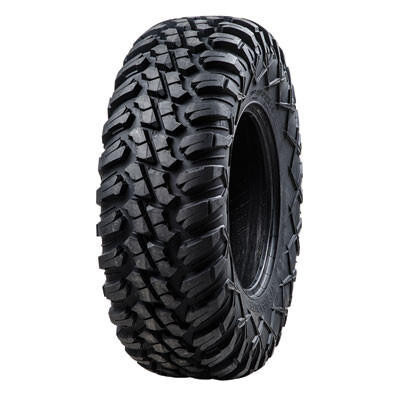
The single biggest upgrade for trail comfort and capability is the tire. Medium/hard-terrain trail tires (Tusk Terrabite, Maxxis Carnivore, Pro Armor Crawler XR, Maxxis Bighorn 2.0) are 8-ply radials with truck-style tread that runs quiet on transit miles and grips on hardpack, rocky, and rooty trail surfaces. Stock all-terrain tires shred quickly on rocky trails.

Tusk Terrabite Radial Medium / Hard Terrain UTV Tires
Tusk
Terrabite Radial Trail Tire
From $197.99
See all top UTV trail tires

Vented Glass Windshield

Trail dust, branch slap, and cold-weather wind protection are the three reasons trail riders add a windshield. Full-glass vented windshields (UTVZilla, Moto Armor, SuperATV) are the trail-rider standard — the vent flap lets you redirect airflow into the cab when it's hot, and the wiper kit gets you home in rain. Skip half-windshields for serious trail use — the airflow gap makes them noisier than running with none.

See all top UTV windshields

Side Mirrors

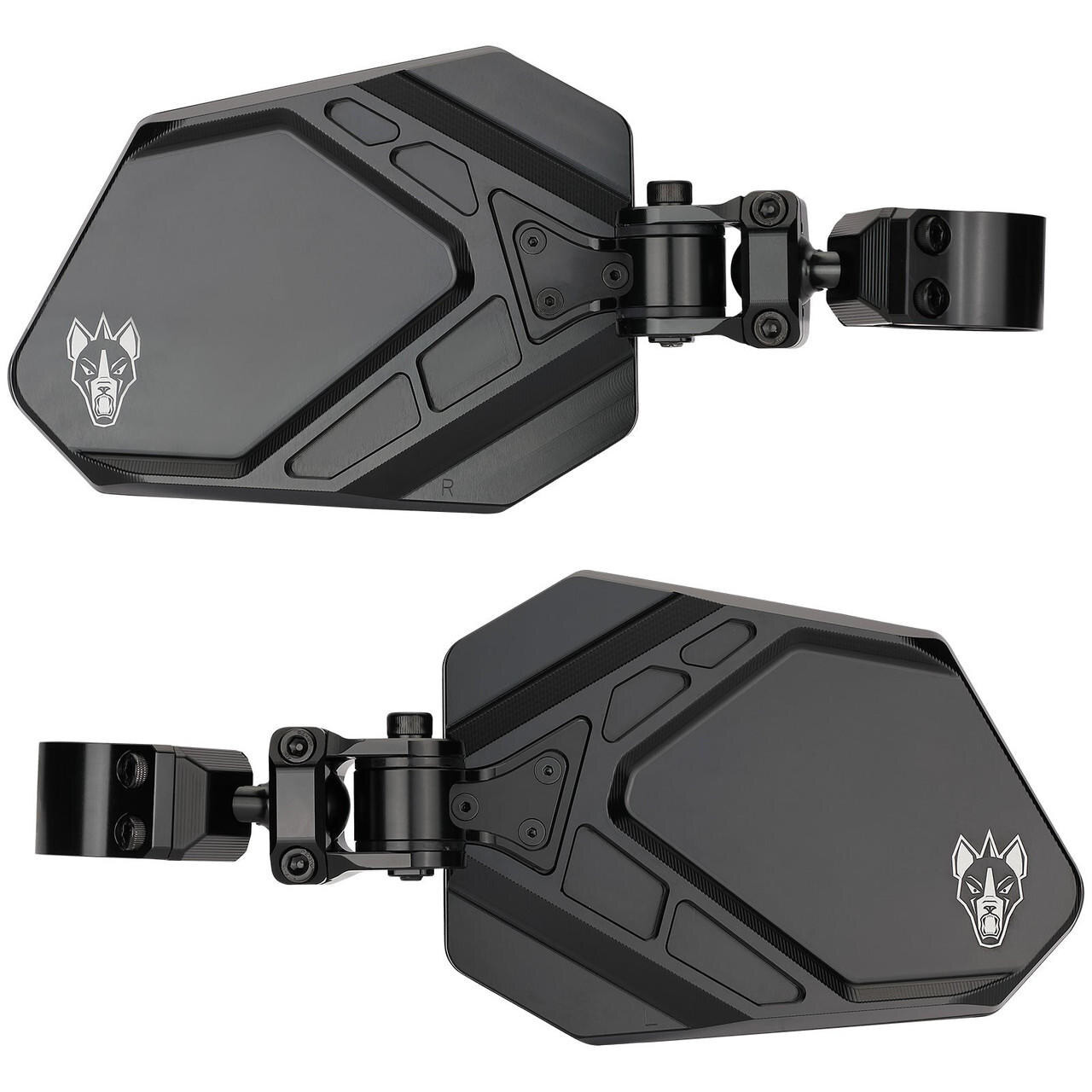
Trail riding usually involves a group of machines, and a mirror set transforms group rides — you see who's catching up, you check that your tow rider hasn't lost line, you signal lane changes through tight switchbacks. Race-grade billet aluminum mirrors with proprietary cage clamps (Chupacabra Cuero Pro, Seizmik, Axia Alloys) survive trail vibration and branch hits where stock plastic mirrors snap off in week one.

Chupacabra Offroad Cuero Pro UTV Side Mirror Set
Chupacabra Offroad
Cuero Pro Side Mirror Set
$209.99
See all top UTV mirrors

4-Point Harnesses

Stock factory seat belts are 3-point automotive belts — designed to keep you in your seat in a 30 mph parking lot collision, not a 30 mph rollover at trail speeds. A 4-point harness with auto-buckle latch (PRP 4.2, Crow, Schroth) keeps you planted in the seat during off-camber crawls and side hits, and the quick-release latch means you can get out fast if needed. Trail-day fatigue drops measurably when you're not bracing against a sliding 3-point belt for hours.

PRP 4.2 Auto Buckle Harness Seatbelt Restraint
PRP Seats
PRP 4.2 Auto Buckle Harness
$119.99
See all top UTV harnesses

Comfort Seats

Stock UTV seats are designed for 30-minute factory test rides, not 6-hour trail days. A bolstered comfort seat (PRP, Beard, Beard XX, Twisted Stitch) with deeper lumbar support and side bolsters that hold you through off-camber sections is the single upgrade most riders mention when asked "what made the biggest difference for long-day trail riding." Don't skip this one if your typical ride is 4+ hours.

See all top UTV seats

LED Light Bar

Trail rides extend into low-light hours more often than you'd think — a 30-mile loop that started at noon turns into a dusk return when one machine breaks down. A 30-50 in LED light bar mounted on the front cage is the minimum kit. Spot beam pattern (not flood) is the right choice for trail riding — you want to see 200 yards out, not light up the cage in front of you.

See all top UTV LED light bars

Roof / Sun Shade

Hot-weather trail riding without a roof turns into heatstroke territory by hour three. A bolt-on aluminum or polycarbonate roof drops cab temperatures 15-20 degrees in direct sun and pays for itself in comfort the first weekend you use it. Aluminum roofs (Pro Armor, SuperATV, Thumper Fab) are quietest at speed; polycarbonate options are lighter and let some light through if you don't want a fully dark cab.

See all top UTV roofs

Suspension Lift Kit (Trail Spec)

Unlike mud builds, trail lifts are modest — a 2-inch bracket lift is the standard trail upgrade because it accommodates 30 in tires without making your machine top-heavy on off-camber sections. Going to 3+ inches works for fire-road builds but reduces handling sharpness on tight technical trails. Trail-spec lift kits (SpeedWerx, SuperATV, Thumper Fab) preserve the factory geometry better than larger lifts.

See all top UTV lift kits

Budget trail build vs premium trail build

Two complete trail-comfort builds at two budget tiers. Budget gets you all-day trail comfortable on a stock RZR XP 1000. Premium adds the comfort and visibility upgrades that turn a 30-mile day into an 80-mile day.

Budget Trail Build

Base platform: Polaris RZR XP 1000 (assumes you already own one)

Build add-on total: $1,117.95
  • Tusk Terrabite Radial Trail Tires (set of 4 at 28x10-14)$791.96
  • Chupacabra Cuero Pro Side Mirror Set$209.99
  • Half-windshield (entry-tier UTVZilla)$119.00
  • Stock harnesses retained (no add)$0.00

The fastest way to trail-ready an existing XP 1000 owner without breaking the bank. The tire upgrade alone changes the ride character on rocky and rooty trails.

Premium Trail Build

Base platform: Polaris RZR Pro XP (assumes you already own one)

Build add-on total: $3,378.27
  • Maxxis Carnivore Trail Tires (set of 4 at 30x10-14)$791.48
  • UTVZilla Pro XP / Turbo R Vented Glass Windshield w/ Wiper$459.00
  • Chupacabra Cuero Pro Side Mirror Set$209.99
  • PRP 4.2 Auto Buckle Harness (driver + passenger)$239.98
  • Pro Armor Polaris RZR Pro XP roof$549.95
  • SuperATV Pro XP 2 in suspension lift kit$307.95
  • 30-inch LED light bar mounted to roll cage$619.92
  • Bolt-on hand grab handles (driver + passenger)$200.00

Build a Pro XP into a true 80-mile-day trail machine. The windshield + roof + harness combination is what turns a sport UTV into something you can ride 6 hours straight without ending the day exhausted.

Trail-build questions, answered

What is the best UTV for trail riding?

The Polaris RZR XP 1000 is the best all-around trail sport UTV because it combines a 64-inch stance suited to most western trails, a 110-HP NA powertrain that's forgiving in technical sections, factory-trail-tuned Walker Evans shocks, and the deepest aftermarket catalog of any sport UTV on the market. For trail systems gated at 50 inches (typical of east-coast and Appalachian trails), the Polaris RZR Trail 1000 is the only factory sport option. For 5-seat family or hunting-party trail days, the Honda Pioneer 1000-5 Deluxe with its DCT transmission and 5-seat layout is the right pick.

Trail S 1000 or XP 1000 for trails?

The choice comes down to trail width and seat count. The Trail S 1000 (60 in stance, 4-seat option) is required for any marked single-track system gated at 60 inches or under. The XP 1000 (64 in stance) is locked out of those systems but gains more suspension travel, higher peak horsepower, and a deeper aftermarket catalog. If you ride mostly western or open trails, buy the XP 1000. If you ride marked single-track with width regulations, buy the Trail S 1000.

If you ride both, the Trail S 1000 with its 60-inch stance is the more versatile choice — it fits most western trails too, just at the slower end of the suspension-travel spectrum.

Pioneer 700 or Pioneer 1000 for trails?

The Pioneer 700-4 is the right budget trail-utility pick — 64-inch stance, 4-seat capacity, ~36 HP from the 675cc single, and an MSRP around $13,000. It's the gateway to Honda's trail-utility ride character at a low price point.

The Pioneer 1000-5 Deluxe (~86 HP, 5-seat, DCT transmission, $22,000+) adds significantly more power, a fifth seat, and the no-CVT-belt reliability that makes long-day trail riding stress-free. The 1000-5 is the right pick if you have the budget and want all-day trail capability without trailside maintenance worry. The 700 is right if you mainly do shorter trail rides and want to spend $9,000 less.

What's the best trail tire for a UTV?

For medium/hard-terrain trail riding (rocks, hardpack, roots), the top picks are the Tusk Terrabite (8-ply radial, $197.99-$240 per tire), the Maxxis Carnivore (8-ply radial, hybrid trail/mud, $254 per tire), the Pro Armor Crawler XR (rocky-trail spec, $175 per tire), and the Maxxis Bighorn 2.0 (premium trail, $175 per tire). All four are 8-ply radials that handle rocky trail punctures better than the 6-ply bias tires they replace.

Match the size to your platform: 28-29 in tires on stock suspension, 30 in tires on a 2 in lift, 32 in tires on a 3 in lift. See our UTV tires buyer's guide for the full per-tire breakdown.

How wide of a UTV fits on a trail?

Trail width regulations vary by region. East-coast and mid-Atlantic marked trail systems (Hatfield-McCoy, Brimstone, Wayne National Forest) typically gate at 50 inches or 64 inches depending on the trail's class. Most western trails (BLM, Forest Service, Moab area) have no fixed width regulation and accept any UTV that physically fits.

Check the trail system's published width regulation before you commit to a wider UTV — a 64-inch Pro XP cannot enter a marked 50-inch trail under any circumstances, and many states fine riders who break the regulation. The Polaris RZR Trail 1000 (50 in) and Trail S 1000 (60 in) exist specifically to address this.

Do I need a windshield for trail riding?

Trail dust, branch slap, and cold-weather wind protection are the three reasons to add one. Most riders add a windshield after their first 30-mile trail day — that's when the dust film on your goggles and the branch sting on your hands becomes annoying enough to spend the money.

Full-glass vented windshields with a wiper kit (UTVZilla, Moto Armor, SuperATV) are the trail standard. The vent flap redirects airflow into the cab when it's hot, and the wiper kit gets you home in rain. Skip half-windshields for serious trail use — the airflow gap makes them noisier and dustier than running no windshield at all.

Best UTV for tight trails?

For trails gated at 50 inches: the Polaris RZR Trail 1000 (50 in stance) is the only modern sport UTV option. For trails gated at 60 inches: the Trail S 1000 (60 in stance) and the Yamaha YXZ1000R SS SE (64 in but narrower physical footprint than a Pro XP) are the best fits.

For unmarked tight switchbacks where width is not regulated but tight cornering matters: the RZR XP 1000 (shorter wheelbase than Pro XP / KRX 1000) is the most agile 64-inch sport UTV. Long-wheelbase machines like the KRX 1000 (98.8 in wheelbase) get pinned in tight switchback sections that the XP 1000 (90.5 in wheelbase) clears.

Cab enclosure or windshield for trails?

Shoulder-season trail riding (October-April in most of the country) is where this question matters. A glass windshield is the cheaper, lighter add — perfect for keeping rain and wind off your hands and chest without committing to a full enclosure.

A full soft or hard cab enclosure adds doors, rear panel, and roof to make a sealed cab that handles cold-weather and even snow trail riding comfortably. Cost roughly $1,200-$3,000 vs $300-$700 for a quality windshield. If your trail riding extends below 40 degrees F regularly, a cab enclosure pays for itself in one season. See our UTV cab enclosures buyer's guide for the full breakdown.

Best UTV for east-coast trails?

East-coast trail systems (Hatfield-McCoy, Brimstone, Wayne National Forest, Burr Oak in Ohio, Windrock in Tennessee) are dominated by tight wooded single-track with width regulations — most gate at 50 or 64 inches. The Polaris RZR Trail 1000 (50 in) is the standard east-coast sport pick. The Honda Pioneer 700-4 (64 in) is the standard utility pick. The Polaris RZR XP 1000 (64 in) fits any non-50 system but loses access to half the marked routes at Hatfield-McCoy and similar parks.

Best UTV for west-coast trails?

West-coast trail systems (Moab, Rubicon, San Bernardino, Hollister Hills) are mostly unregulated by width, so the choice depends on the trail type. For rocky technical (Moab, Rubicon): the Kawasaki Teryx KRX 1000 (14.4 in clearance, 68.1 in stance, long wheelbase for stability) is purpose-built. For fast fire-road and open-desert trails: the Polaris RZR Pro XP (181 HP turbo, factory Fox 2.5 Podium QS3) is the speed king. For balanced western trail riding that mixes both: the Polaris RZR XP 1000 (110 HP NA, balanced suspension, deepest aftermarket) remains the most popular choice.

Build your trail rig today.

UTV Source carries every category in this guide — trail tires from Tusk and Maxxis, windshields from UTVZilla and Moto Armor, mirrors and harnesses for every platform, plus the per-vehicle accessory catalog for every model on this page. Free shipping over $99.