Best Pioneer 1000 Upgrades by Category
Eight upgrade categories — each with tier-labeled picks (Best Premium, Best Value, Best Budget) drawn from the actual Pioneer 1000 / 1000-5 aftermarket. Use the sticky nav to jump straight to what you’re shopping.
Roofs & Tops
The most-installed Pioneer upgrade. A roof adds shade and rain protection and gives you a platform for a light bar. The 1000-5 crew cab is long, so confirm 3-seat vs 5-seat fitment before ordering — the picks below are sized for the 1000-5.

Ranch Armor 1000-5 Metal Top
$1,399
Powder-coated steel top built for the 1000-5 crew. The heavy-duty choice for hunting and ranch work where a plastic roof won’t survive brush and gear.
- Fits Pioneer 1000-5 crew
- Powder-coated steel
- Light-bar mounting platform

Tusk Profile Aluminum Roof
$659.99
Lightweight aluminum top at roughly half the weight of steel — quieter than plastic and won’t rust. The everyday value pick for the 1000-5.
- Low-profile aluminum
- Lighter than a steel top
- No-rust finish
QuadBoss Pioneer 1000 Roof
$632.99
A straightforward hard roof for the 3-seat Pioneer 1000 — the simplest way to get shade and rain protection without crew-cab pricing.
- Fits 3-seat Pioneer 1000
- Bolt-on hard roof
- Budget-friendly
Windshields
A windshield is the difference between eating trail dust and arriving clean. Pioneer owners typically pair a front windshield with a roof so wind has somewhere to go over the cab rather than into it.

Seizmik Windshield Protector
$299.99
Hard-coated front windshield that resists scratching and yellowing — Seizmik’s reputation is built on optical-grade panels that stay clear for years.
- Hard-coated, scratch-resistant
- Fits Pioneer 1000 & 1000-5
- Bolt-on, no drilling
Doors & Cab Enclosures
The Pioneer ships with lower half-doors; the upgrade most owners want is an upper enclosure to fully seal the cab for cold mornings and dusty trails. Soft enclosures cost far less than a full hard cab and zip open when it warms up.
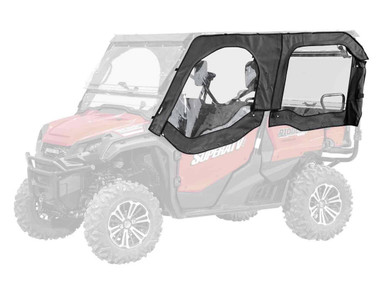
SuperATV Primal Upper Doors
$805.95
Marine-grade soft upper-door enclosure for the 1000-5. Seals the upper cab against dust and rain, with roll-up windows for airflow on warm days.
- Fits Pioneer 1000-5 crew
- Roll-up vented windows
- Pairs with factory lower doors
Cargo & Storage
Cargo is where the Pioneer earns its keep. The tilt bed handles a half-ton, but hunters and ranchers add a bed extender for long loads and a spare-tire carrier so a flat in the field isn’t a tow home.
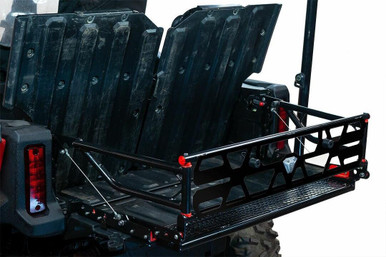
Seizmik X10D Bed Extender
$541.49
Folds out past the tailgate for long loads, or in as a cargo divider to keep gear from sliding. A staple of Pioneer hunting builds.
- Extends or divides the bed
- Steel construction
- Fits 1000-5 tilt bed
SuperATV Spare Tire Carrier
$423.95
Bed-mounted carrier that gets a full-size spare out of the way and onto the rig — cheap insurance miles from the trailhead.
- Holds a full-size spare
- Bed-rail mount
- Fits Pioneer 1000-5
Bumpers & Protection
Front and rear bumpers protect the Pioneer’s body panels from brush, trees and the occasional backing-into-a-stump. A rear replacement bumper also gives you a clean recovery and accessory mounting point.
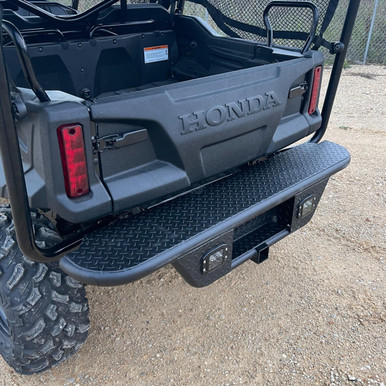
Ranch Armor Rear Replacement Bumper
$929
Full steel rear replacement bumper that wraps and protects the back of the 1000-5. Built to the same ranch-duty standard as Ranch Armor’s tops.
- Replaces the factory rear
- Heavy-gauge steel
- Fits Pioneer 1000-5
SuperATV Workmaster Rear Bumper
$264.95
A lighter, lower-cost rear bumper that still adds real impact protection — the value pick if you want coverage without the full-replacement price.
- Bolt-on rear protection
- Powder-coated steel
- Fits Pioneer 1000-5
Winch & Plow
The Pioneer’s torque and the DCT’s low-speed control make it a capable plow rig. Start with a model-specific winch mount, then add a front plow mount; the same front receiver setup serves both.
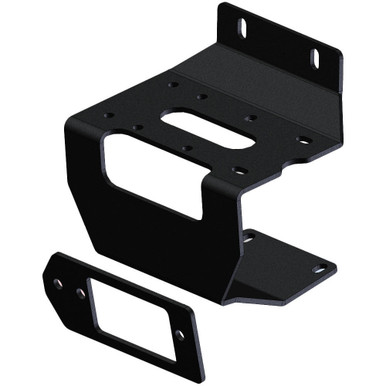
KFI Winch Mount
$59.95
A Pioneer owner staple. Model-specific steel mount that drops a winch into the front of the Pioneer 1000 without fabrication.
- Bolt-on, no drilling
- Fits common winch brands
- Fits Pioneer 1000
Tusk SubZero 72″ Snow Plow Kit
$675.95
Complete winch-equipped 72-inch plow package for the Pioneer 1000 — blade, push tube and mount in one kit for serious winter work.
- 72-inch plow blade
- Winch-lift compatible
- Complete kit
KFI Front-Mount Plow Mount
$99.95
The bracket that ties a push tube to the Pioneer’s frame. Add this to a winch and a blade and you have a plow rig for a fraction of a full kit.
- Front-frame plow mount
- Pairs with KFI push tubes
- Fits Pioneer 1000
Suspension
A loaded Pioneer rides better on upgraded shocks, and a hard-working machine eventually wears its A-arm bushings. These are the two suspension jobs Pioneer owners tackle most.

Elka Stage 1 Shock Kit
$1,600
Front-and-rear Elka Stage 1 kit that transforms the loaded ride quality of the 1000-5 — the upgrade that makes a work machine comfortable again.
- Front & rear kit
- Tunable for load
- Fits Pioneer 1000-5
High Lifter Front A-Arms
$529.95
Forward-reach front A-arms that add stability and clearance — a popular base for a mild lift on the 3-seat Pioneer 1000.
- Forward-offset geometry
- Powder-coated finish
- Fits Pioneer 1000
Lift Kits
A 2-inch lift opens room for taller tires and adds ground clearance for rutted trails — the most common way Pioneer owners chase a more aggressive stance without a full long-travel build. Confirm your model year before ordering.

QuadBoss Lift Kit (2016–2021)
$431.99
Bolt-on lift for the 2016–2021 Pioneer 1000 that clears taller tires and lifts the chassis for ruts and rocks — the everyday value lift.
- Fits 2016–2021 Pioneer 1000
- Bolt-on install
- Room for taller tires
Moose Offroad Lift Kit
$262.95
The lowest-cost way to add clearance to a Pioneer 1000 — a simple spacer-style lift for owners running mild-size tires.
- Budget bolt-on lift
- Adds ground clearance
- Fits Pioneer 1000