How to Take Photos That Actually Sell Your UTV

How to Take High-Impact Photos That Sell Your UTV Fast
So you’ve made the decision. Your UTV is going up for sale. Maybe you're upgrading, maybe you're switching platforms, or maybe it's just time for something new. Either way, one thing is guaranteed: your photos will make or break your listing.
It doesn’t matter how much money you’ve invested, how many hours you've spent wrenching, or how many upgrades you've added over the years. If your photos don’t show it, buyers won’t feel it. And if they don’t feel it, they’re scrolling right past.
The good news? You don’t need a professional camera crew or studio setup to make your machine stand out. You just need to know what serious buyers are looking for—and how to present it.
Here’s your go-to guide for capturing photos that show off every bit of the blood, sweat, and dollars you've poured into your rig.
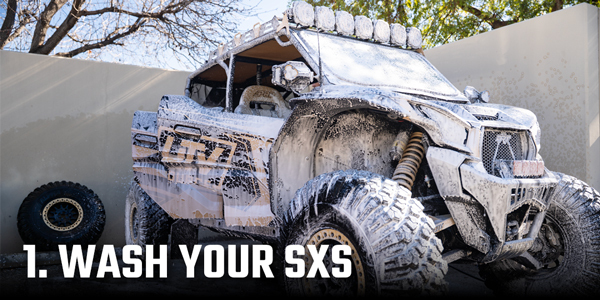
1. Wash Your SXS
A clean machine and a tidy background go a long way in showing how well a UTV has been cared for. It doesn’t need to be showroom perfect, but dirt, mud, and clutter can quickly hide its true condition and make a solid build look rougher than it really is.
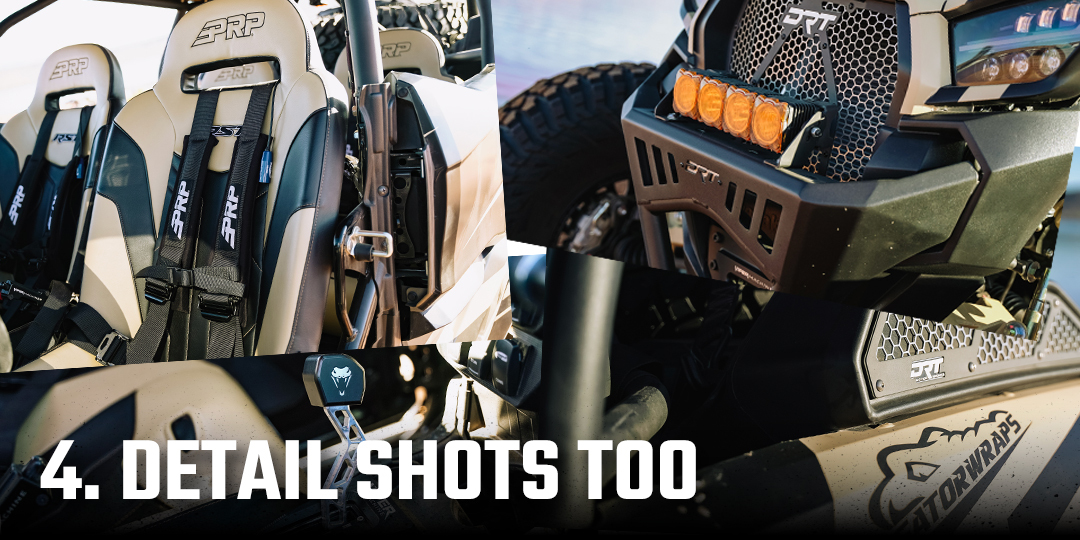
Start with a thorough wash to knock off dust, mud, and trail debris. Pay attention to the details like wheels, suspension components, and the interior; these are areas buyers will be looking at closely. Once the machine is dialed in, take a minute to clean up the area around it. A clear, distraction-free background helps keep the focus where it belongs: on your SXS.
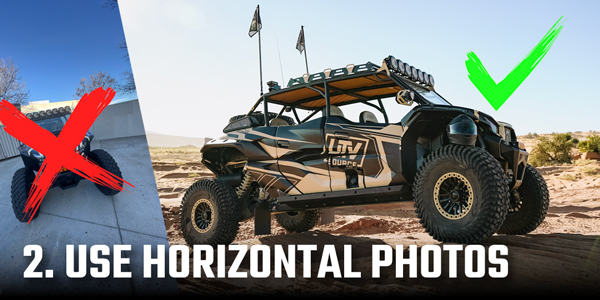
2. Use Horizontal Photos
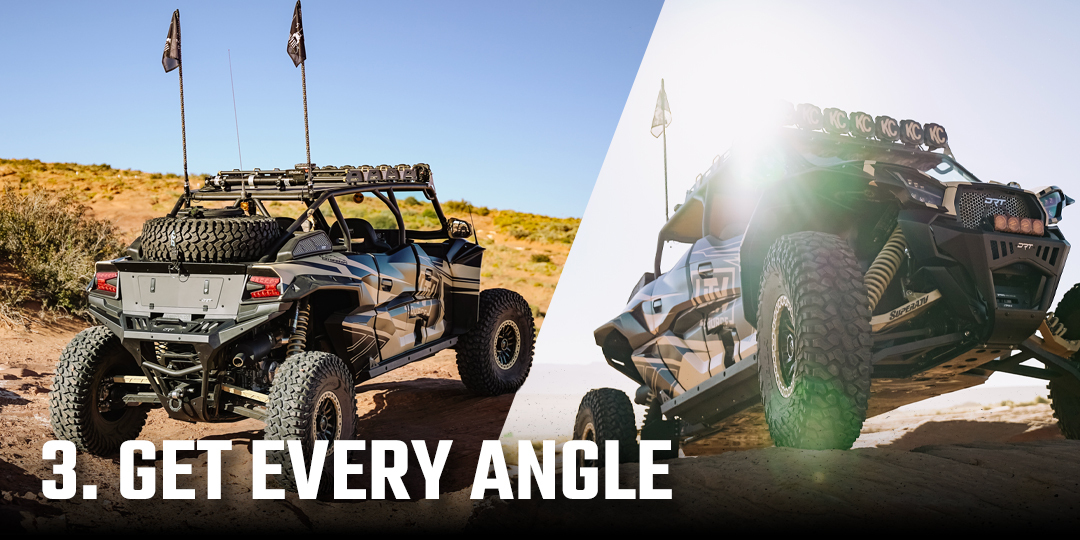
Vertical photos might work for social media, but they don’t do your SXS any favors in a classified listing. They tend to make the machine look smaller and leave a lot of wasted space that adds zero value.
Stick with horizontal (landscape) shots so your UTV fills the frame the way it should. This gives potential buyers a better sense of scale, stance, and overall condition at a glance. It also creates a cleaner, more professional-looking listing across most devices and platforms.
Bottom line: fill the frame with the machine, not empty space.